
Elke patiënt en elke vorm van kanker is anders. Daarom stellen we in het Kanker Centrum UMC Utrecht voor iedereen een behandelplan op maat op. U krijgt persoonlijke begeleiding tijdens het hele traject. Wij staan als team om u en uw naasten heen, met aandacht voor uw lichamelijke én mentale gezondheid.
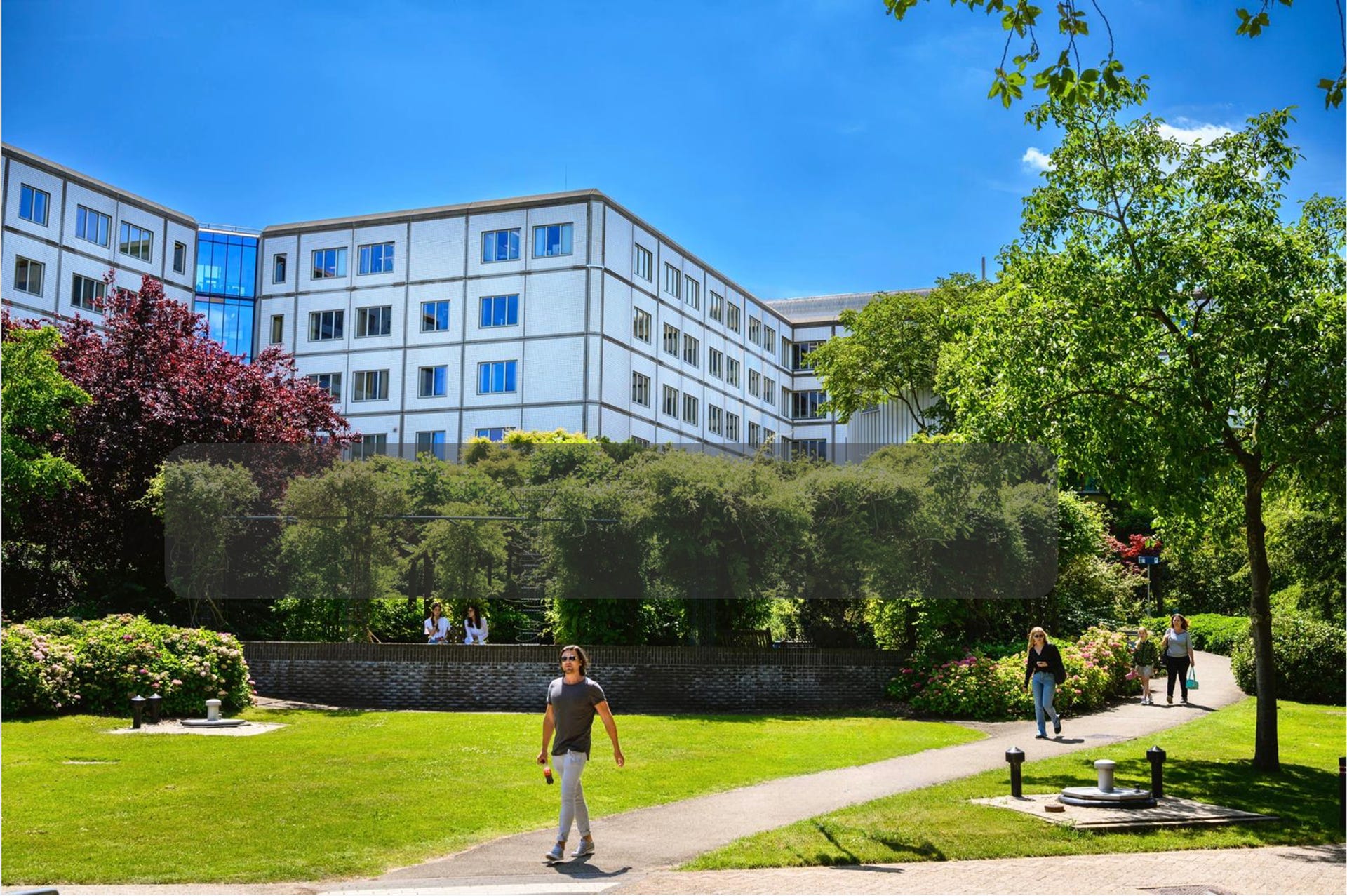
Kanker Centrum UMC Utrecht
Kanker heeft een enorme invloed op uw leven en dat van uw naasten en vraagt om zorg die past bij wie u bent en wat u nodig heeft. Het Kanker Centrum UMC Utrecht is hét oncologisch kennis- en behandelcentrum van Midden-Nederland. We combineren onze jarenlange ervaring met de nieuwste behandelingen en wetenschappelijke inzichten. We zorgen ervoor dat u omringd wordt door een team aan toegewijde zorgprofessionals. Samen helpen we u zo goed mogelijk door deze moeilijke tijd heen. Met elkaar stemmen we het behandelplan zorgvuldig af op uw persoonlijke situatie vandaag, met oog op de mogelijkheden van morgen.
Wat u mag verwachten van het Kanker Centrum UMC Utrecht
Persoonlijke begeleiding
U kunt snel bij ons terecht
Bij het vermoeden van kanker wilt u snel weten waar u aan toe bent. In het Kanker Centrum UMC Utrecht doen we er alles aan om u zo snel mogelijk te helpen. Bij een kankerdiagnose staat er direct een heel team voor u klaar om samen met u het behandelplan op te stellen. U krijgt een vaste contactpersoon die u begeleidt tijdens deze ingrijpende periode.
De nieuwste therapieën
In het Kanker Centrum UMC Utrecht behandelen we kanker, wanneer dit kan, zo precies mogelijk en zo min mogelijk belastend. Met nieuwe en slimme technieken zoals beeldgestuurde precisiebestraling, operaties met de robot en effectieve kijkoperaties kunnen we tumoren zeer gericht behandelen, terwijl gezond weefsel zoveel mogelijk gespaard blijft.
Ervaringen in het Kanker Centrum UMC Utrecht

Tamara
"Ik ben veel te jong om zomaar te berusten in het idee dat er niks meer aan te doen zou zijn. Ik wilde weten of de topexperts van het UMC Utrecht nog mogelijkheden zagen."
Lees meer

Jan
“Als je hiervoor in aanmerking komt, twijfel niet. Er staat een fijn enthousiast team klaar bij radiotherapie om te opereren zonder snijden."
Lees meer

Anita
“Ik ben ontzettend blij met het UMC Utrecht. Dankzij sneldiagnostiek kwam de darmkanker aan het licht en kon mijn behandeling starten."
Lees meer

Joop
"Bij het UMC Utrecht voel ik me altijd goed verzorgd. We kennen elkaar inmiddels, het voelt vertrouwd, en de behandelingen doen geen pijn."
Lees meer

Carola
"Ik had het liever allemaal niet meegemaakt, maar als het dan tóch moet, kan het maar het best op deze manier gebeuren".
Lees meer

Femmy
"Het beweegprogramma van het UMC Utrecht gaf me de kracht om dat opnieuw aan te kunnen. En ook mentaal gaf het me rust.”
Lees meer

Marijke
"In het ziekenhuis zijn ze zo betrokken met je. De artsen, de fysio, zelfs de receptionist, iedereen is aardig en meedenkend."
Lees meer

Joop
"Mijn huisarts drong erop aan om naar het UMC Utrecht te gaan. Omdat ze dit een goed ziekenhuis vond, zeker als een stamceltransplantatie nodig zou blijken. Het was het juiste besluit.”
Lees meer
Snel aan de beurt
In het Kanker Centrum UMC Utrecht kunnen patiënten met een verdenking op kanker snel terecht voor onderzoek. Zo krijgt u zo snel mogelijk duidelijkheid over de diagnose en mogelijke vervolgstappen.
Moet u geopereerd worden, dan doen we er alles aan om dit zo spoedig mogelijk te laten plaatsvinden. Het Kanker Centrum UMC Utrecht streeft er altijd naar om u binnen de landelijke richtlijnen (ook wel SONCOS-normen genoemd) te kunnen helpen. Zo kunt u uitgaan van tijdige, deskundige en veilige zorg volgens de hoogste standaarden.
Verschillende soorten kanker
Kanker is een verzamelnaam voor meer dan honderd ziekten waarbij cellen zich ongecontroleerd gaan delen. Die abnormale cellen kunnen uitgroeien tot een tumor en omliggend weefsel beschadigen. Soms verspreiden ze zich via het bloed of lymfestelsel naar andere delen van het lichaam. De oorzaken en symptomen verschillen enorm. De ene keer ontstaat kanker door omgevings- of leefstijlfactoren en de andere keer is het erfelijk bepaald.
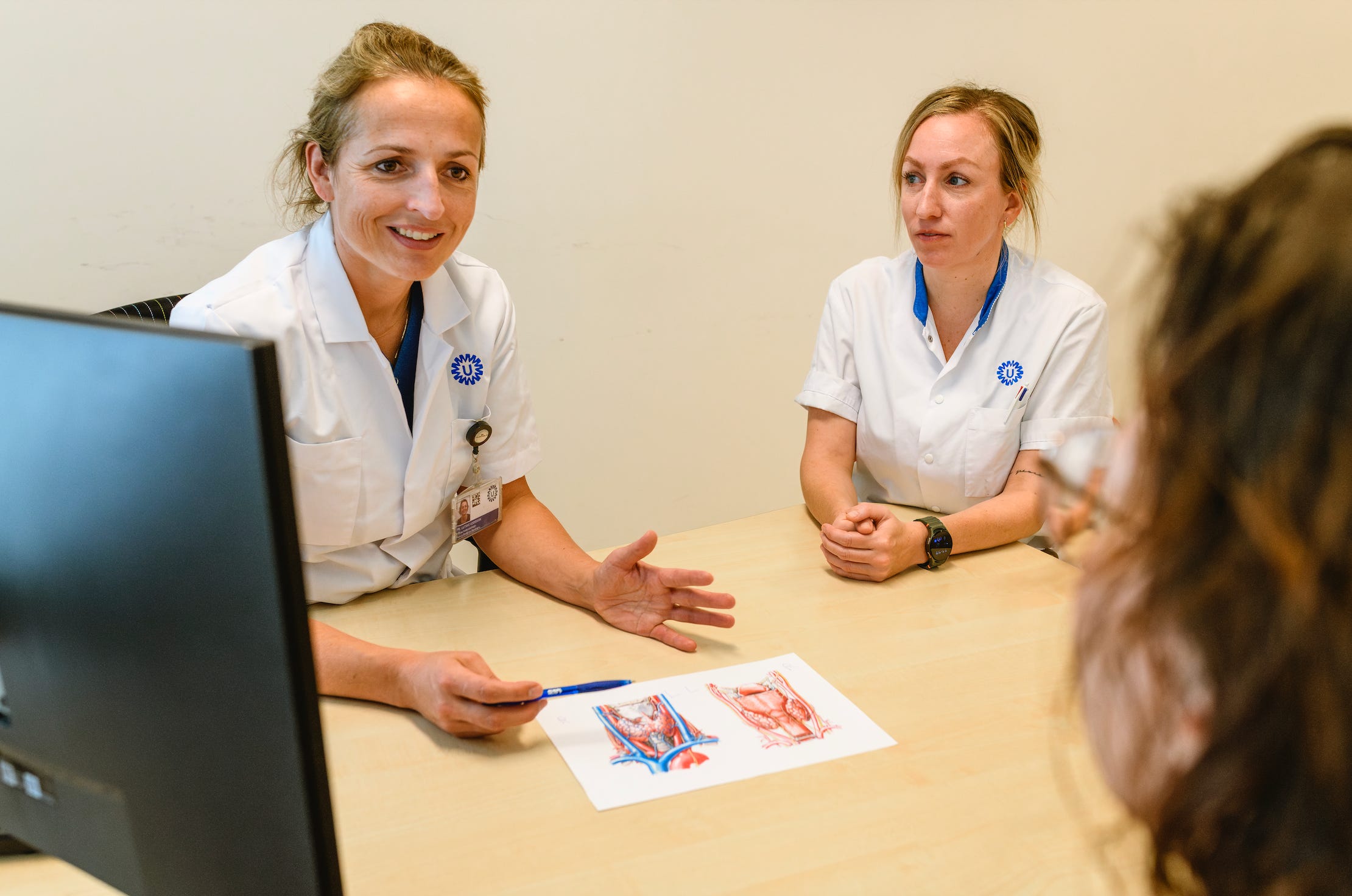
Kanker kan voorkomen in bijna elk orgaan, maar ook in weke delen, bot of bloed. Hoe de ziekte zich ontwikkelt, verschilt per persoon en per kankersoort. Daarom krijgt iedere patiënt in het Kanker Centrum UMC Utrecht een behandeling op maat, afgestemd op de aard van de ziekte en de mens achter de patiënt.
Ziektebeelden

Blaaskanker
Blaaskanker is een kwaadaardige tumor in de blaas, ontstaan in de binnenbekleding van de blaas. Soms kan blaaskanker uitzaaien.
Lees meer

Zaadbalkanker
Zaadbalkanker (ook wel teelbalkanker genoemd) is een zeldzame vorm van kanker.
Lees meer

Prostaatkanker
De prostaat is een klier onder de blaas die prostaatvocht aanmaakt. Bij prostaatkanker ontstaat een tumor in de prostaat.
Lees meer

Longkanker
Longkanker ontstaat wanneer cellen in de long ongecontroleerd gaan delen en uitgroeien tot een kwaardaardige tumor (longcarcinoom).
Lees meer

Darmkanker
Darmkanker ontstaat wanneer cellen in de wand van de dikke darm of endeldarm zich ongecontroleerd gaan delen. Meestal begint dit als een poliep die kwaadaardig wordt.
Lees meer

Endocriene tumoren
Endocriene tumoren ontstaan in organen die hormonen produceren. Dit kunnen goedaardige en kwaadaardige tumoren zijn.
Lees meer

Hematologische kanker
Hematologische kanker is een verzamelnaam voor kanker in het bloed, beenmerg of de lymfeklieren.
Lees meer

Hoofd-hals kanker
Onder hoofd-halskanker verstaan we alle kwaadaardige tumoren van de bovenste lucht- en voedselwegen.
Lees meer

Gynaecologische kanker
Gynaecologische kanker is kanker die ontstaat in de vrouwelijke voortplantingsorganen. Het kan voorkomen in de baarmoeder, eierstokken, baarmoederhals, vagina of vulvalippen.
Lees meer

Maag- en slokdarmkanker en GIST
Maagkanker, slokdarmkanker en GIST ontstaan in het spijsverteringsstelsel.
Lees meer

Lever-, alvleesklier-, galblaas en galwegkanker (HPB)
HPB kanker staat voor kanker in de lever (hepato), alvleesklier (pancreas) en galblaas en/of galwegen (biliair).
Lees meer

Melanomen
Een melanoom, ook wel ‘kwaadaardige moedervlek’ genoemd, is een agressieve vorm van huidkanker.
Lees meer

Sarcomen
Sarcomen zijn tumoren in de weke delen van het lichaam. Het zijn vaak zeldzame vormen van kanker.
Lees meer

Neuro-oncologie
Een neuro-oncologische aandoening kan een hersentumor zijn, tumoren in of bij het ruggenmerg, of schade van het zenuwstelsel als gevolg van (andere soorten) kanker.
Lees meer
Schildklier- en bijschildkliertumoren
Schildklier- en bijschildkliertumoren vallen onder de groep endocriene tumoren. Tumoren in deze klieren kunnen goedaardig of kwaadaardig zijn.
Lees meer
Behandeling van kanker
In het Kanker Centrum UMC Utrecht bieden we de nieuwste behandelingen, vaak in combinatie met elkaar. Welke behandeling u krijgt, hangt af van het type kanker, het stadium van de ziekte en uw persoonlijke situatie.
Ons team van specialisten stelt samen met u een behandelplan op maat op. Zo krijgt u zorg die past bij u, met de best mogelijke kans op herstel en een zo goed mogelijke kwaliteit van leven.
Radiotherapie
Radiotherapie is een medische behandeling met röntgenstraling, een radioactieve bron of een combinatie van deze twee. Een ander woord voor radiotherapie is bestraling. Radiotherapie wordt ook ingezet na een operatieve behandeling van kanker of in combinatie met chemotherapie of immuuntherapie. In sommige gevallen kunnen we bij het toedienen van de bestraling gebruik maken van de MR-Linac; een innovatief bestralingsapparaat, uitgevonden in het UMC Utrecht.
Chemotherapie
Chemotherapie is een behandeling bij kanker. Meestal wordt dit via een infuus gegeven. Soms wordt chemotherapie in combinatie met andere behandelingen gegeven, zoals bestralingen (radiotherapie) of immuuntherapie. Het doel is dat kankercellen dood gaan van chemotherapie. Er gaan ook goede cellen dood van chemotherapie, daardoor kunnen er bijwerkingen ontstaan.
Chirurgie
Een operatie is vaak een belangrijk onderdeel van de behandeling van kanker. In het UMC Utrecht voeren we operaties zo precies en zo min mogelijk belastend uit. Waar mogelijk gebruiken we een operatie robot, of proberen we de tumor tijdens een kijkoperatie al te verwijderen, zodat u sneller herstelt en vaak minder littekens overhoudt.
Bij sommige patiënten met uitzaaiingen in de buik kan een HIPEC-behandeling een optie zijn. Hierbij worden tijdens een operatie zichtbare tumoren verwijderd en wordt de buik gespoeld met verwarmde chemotherapie. Deze behandeling wordt alleen in gespecialiseerde centra zoals het UMC Utrecht uitgevoerd.
Immuuntherapie
Immuuntherapie is een verzamelnaam voor verschillende behandelingen die het afweersysteem (immuunsysteem) versterken. Immuuntherapie is de laatste jaren de belangrijkste ontwikkeling geweest voor de behandeling van kanker.
Doelgerichte therapie
Kanker is een ziekte waarbij het erfelijke materiaal (DNA) fouten oploopt. De DNA afwijking is dus het verschil tussen een normale cel en een kankercel. Tegenwoordig zijn er nieuwe medicijnen beschikbaar, waarmee we proberen om kankercellen doelgericht te remmen in hun groei, door juist gebruik te maken van die DNA-afwijking. Medicijnbehandeling die gebruik maakt van de DNA-afwijking in de kankercel noemen we: doelgerichte behandeling, of in het Engels: targeted therapy.
Cel- en gentherapie
Celtherapie is een behandeling met levende lichaamscellen. Meestal zijn dat cellen van het afweersysteem van de patiënt zelf. Deze afweercellen worden uit het bloed gehaald en moleculair bewerkt zodat ze kankercellen beter kunnen herkennen en vernietigen. Daarna krijgt de patiënt de bewerkte cellen per infuus weer toegediend. Van gentherapie is sprake als ook het DNA van de afweercellen wordt aangepast.
Hormoontherapie
Hormoontherapie is een behandeling met medicijnen. De tabletten en/of depot injecties zorgen ervoor dat hormonen geen invloed kunnen uitoefenen op de groei van tumorcellen.
Nucleaire therapie
Bij nucleaire therapie (ook wel radioactieve therapie of radionuclidetherapie genoemd) wordt een kleine hoeveelheid radioactieve stof toegediend. Die stof hecht zich aan kankercellen en bestraalt ze van binnenuit, waardoor ze worden vernietigd.
Mensgericht en deskundig
Persoonlijke zorg en aandacht voor u staan bij ons centraal. We kijken niet alleen naar de ziekte, maar naar uw hele situatie. U krijgt een vaste en goed bereikbare contactpersoon die u begeleidt tijdens en na uw behandeling. Waar nodig betrekken we andere zorgverleners, zoals een maatschappelijk werker, psycholoog, fysiotherapeut of diëtist. We denken mee over praktische vragen, contact met uw huisarts en ondersteuning thuis. Ook na afloop van de behandeling blijven we betrokken.
Het Kankercentrum UMC Utrecht is een academisch centrum. Onze expertise komt voort uit jarenlange ervaring in kankerzorg, gecombineerd met wetenschappelijk onderzoek en onderwijs.
Daarbij werken we nauw samen met toegewijde partners op het Utrecht Science Park, zoals het Prinses Máxima Centrum, en met andere ziekenhuizen in de regio. Zo combineren we persoonlijke begeleiding met specialistische kennis en innovatie. We bieden de beste zorg van vandaag en bouwen tegelijk aan de kankerzorg van morgen.
Minimaal belastende- en beeldgestuurde ingrepen
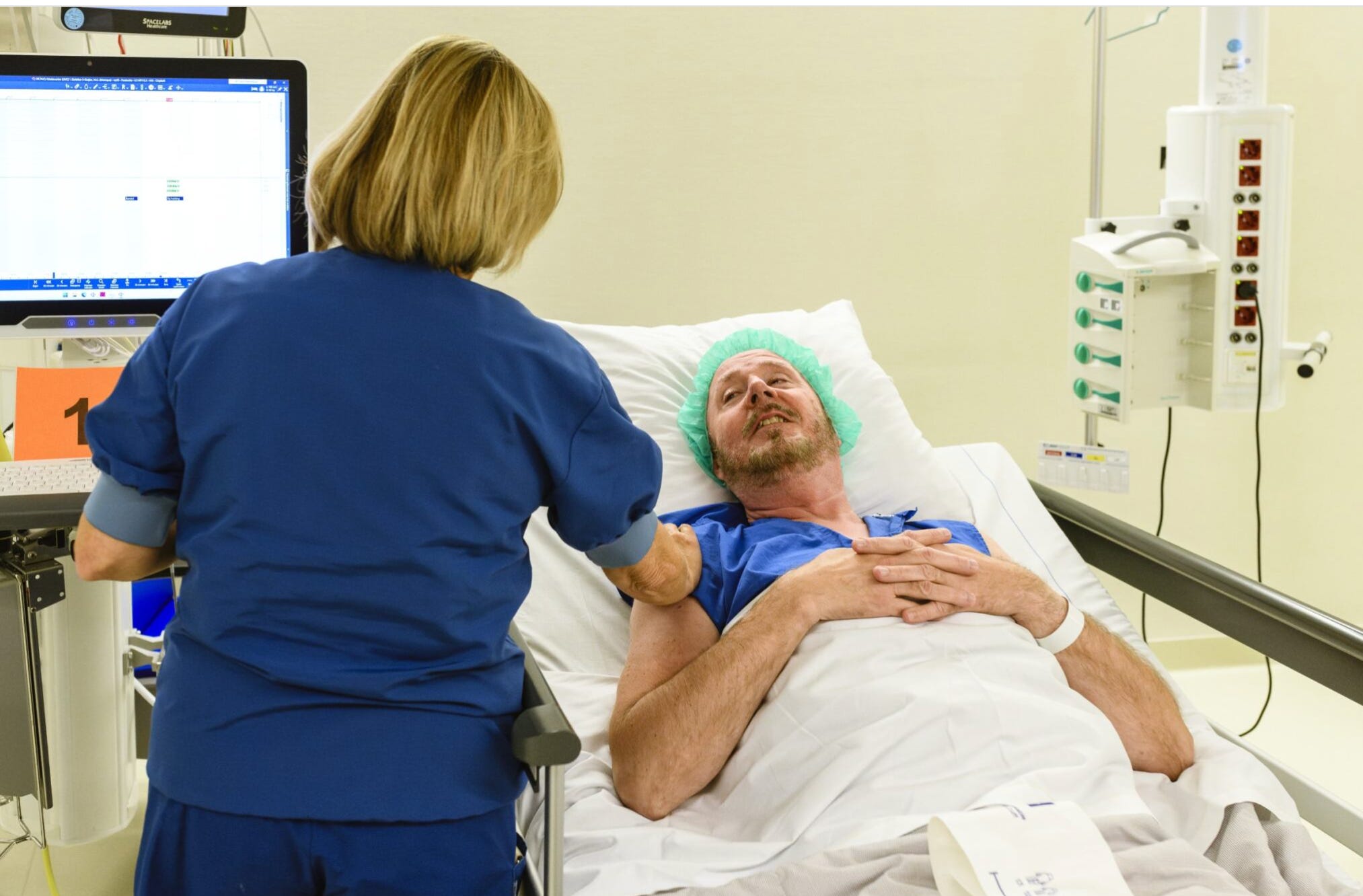
In het Kanker Centrum UMC Utrecht behandelen we kanker zo precies en zo min mogelijk belastend. Met vernieuwende technieken zoals bestraling met de MR-Linac, operaties met de robot en kijkoperaties kunnen we tumoren zeer gericht behandelen, terwijl gezond weefsel zoveel mogelijk gespaard blijft.
De MR-Linac is een technologische doorbraak die we in het UMC Utrecht zelf hebben ontwikkeld. Dit apparaat combineert een MRI-scanner met een bestralingsinstallatie, waardoor we de tumor tijdens de behandeling continu kunnen volgen en uiterst precies kunnen bestralen. Ook bij operaties maken onze chirurgen gebruik van 3D-beeldvorming en de operatierobot. Zo kunnen ingrepen minder belastend worden uitgevoerd en herstelt u vaak sneller.
Deze manier van behandelen zorgt vaak voor minder pijn, minder littekens en een sneller herstel. Zo kunt u uw dagelijkse leven meestal eerder weer oppakken.
Meer over onze behandelingen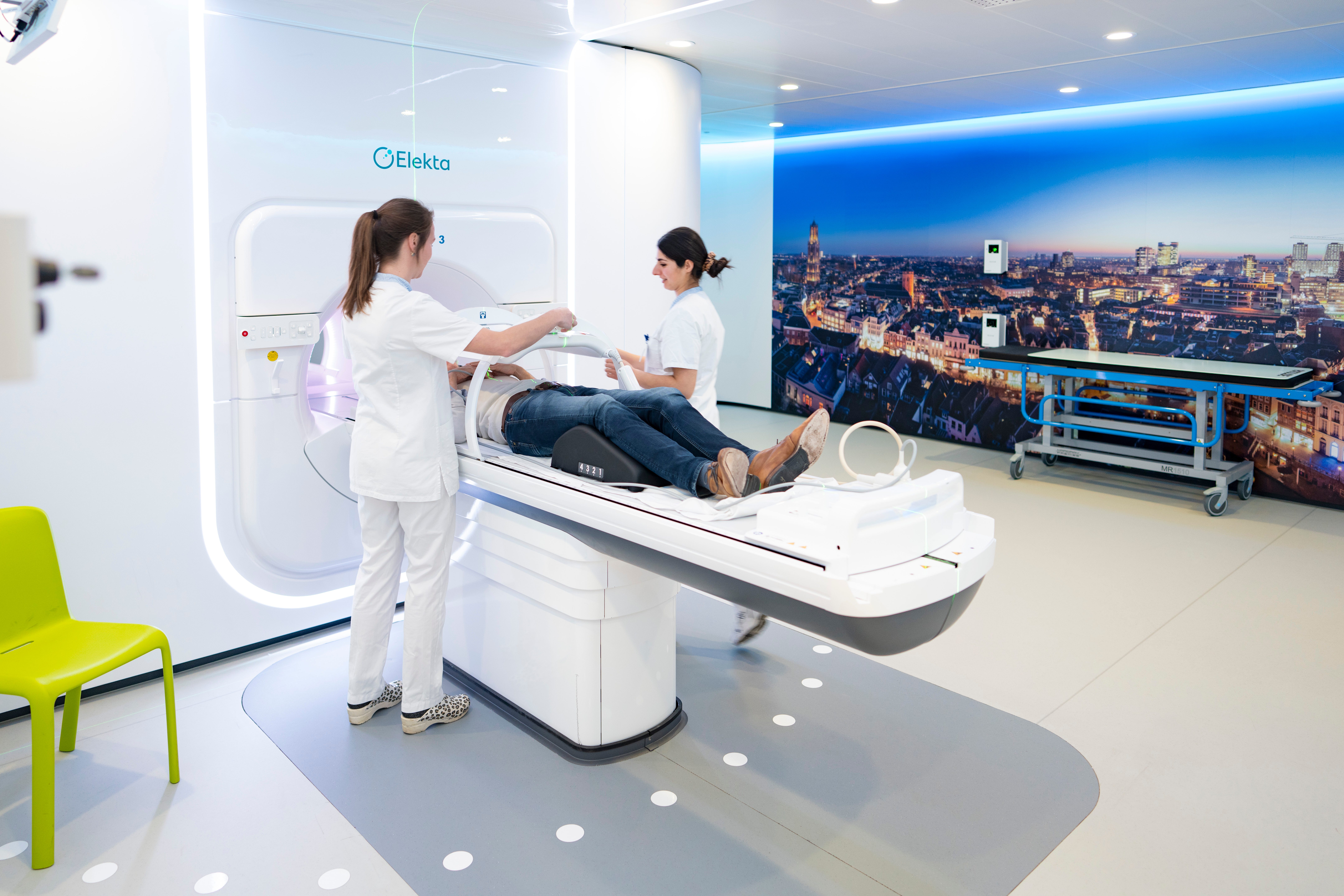
De nieuwste therapieën
In het Kanker Centrum UMC Utrecht werken artsen en onderzoekers samen aan vernieuwende therapieën zoals immuuntherapie en CAR-T-celtherapie. Daarbij gebruiken we het eigen afweersysteem van de patiënt om kankercellen gericht aan te vallen.
Bij CAR-T-therapie worden afweercellen van de patiënt aangepast, zodat ze kankercellen beter herkennen en vernietigen. Deze aanpak biedt nieuwe hoop bij bepaalde vormen van bloed- en lymfeklierkanker. Of gentherapie of immuuntherapie past in uw behandelplan zal uw behandelaar met u bespreken.
We blijven onderzoek doen naar nieuwe toepassingen, zodat meer patiënten kunnen profiteren van deze baanbrekende therapieën, nu en in de toekomst.
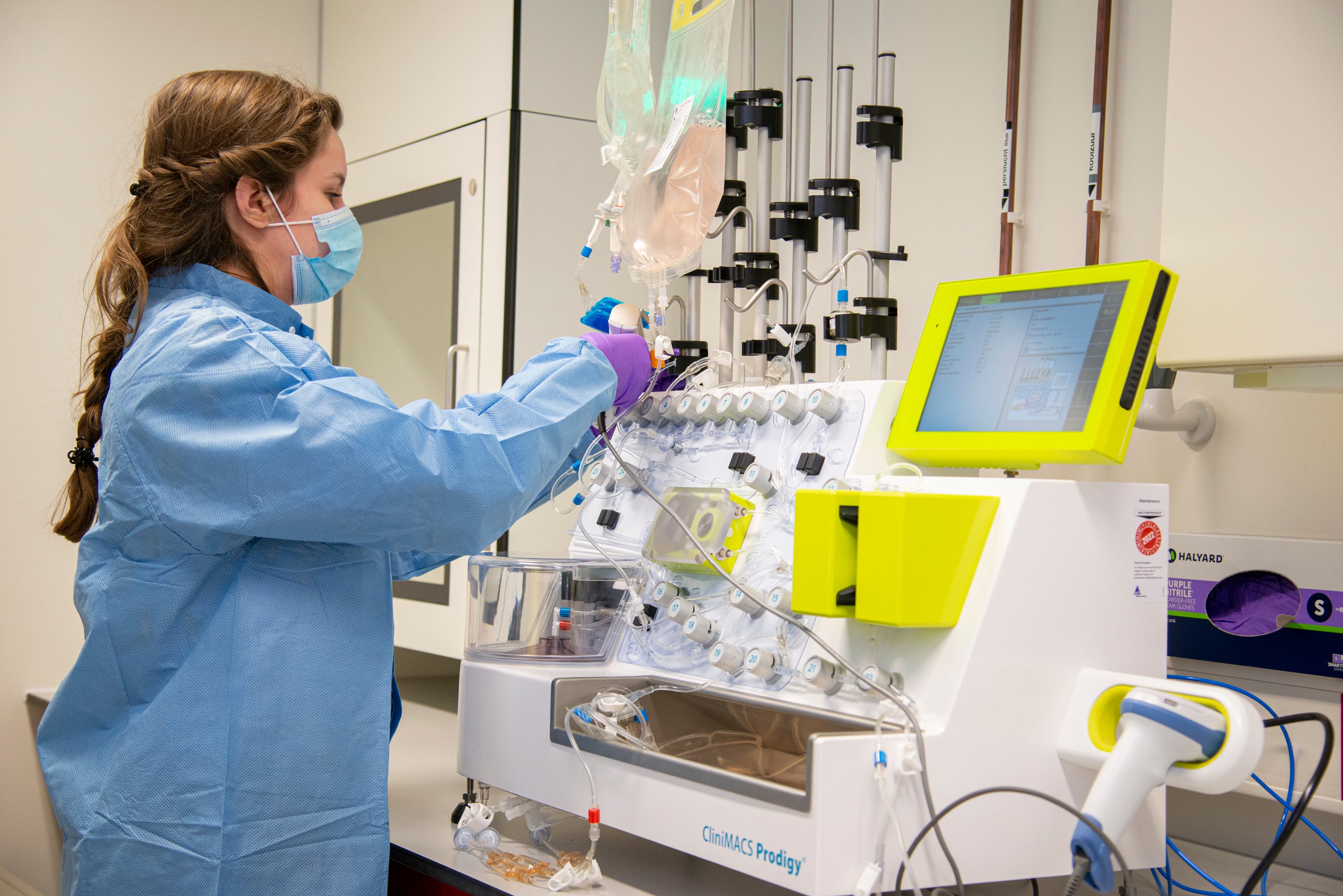
Kanker op jonge leeftijd
Als jongvolwassene kanker krijgen, is ingrijpend. AYA’s (Adolescents & Young Adults) zijn mensen tussen de 18 en 39 jaar die in een levensfase vol plannen en toekomstperspectief plotseling te maken krijgen met kanker. Dat brengt niet alleen medische vragen met zich mee, maar ook zorgen over studie, werk, relaties, vruchtbaarheid, sport of zelfstandigheid.
In het Kanker Centrum UMC Utrecht bieden we AYA-zorg: zorg die speciaal is afgestemd op deze levensfase. Via onze AYA-poli krijgen patiënten tijdens en na hun behandeling begeleiding met focus op wat de AYA-patiënten nodig hebben; medisch, mentaal en praktisch. Samen kijken we hoe zij hun leven zoveel mogelijk kunnen blijven vormgeven, ondanks en na de ziekte.
Palliatieve zorg
De kans op genezing van kanker verschilt per situatie. Als u weet dat u niet meer geneest, bieden wij passende zorg om de kwaliteit van uw leven zo goed mogelijk voort te zetten. Met onze behandelingen proberen wij de ziekte zoveel mogelijk af te remmen en klachten te verlichten (ook wel palliatieve zorg genoemd). Daarbij ondersteunen we u om zo fit en comfortabel mogelijk te blijven.
We bieden u ook mentale, sociale en spirituele steun. Bijvoorbeeld door u in contact te brengen met lotgenoten of praktische zaken in het dagelijkse leven te regelen. Samen bespreken we wat u belangrijk vindt en welke steun u en uw naasten nodig hebben.
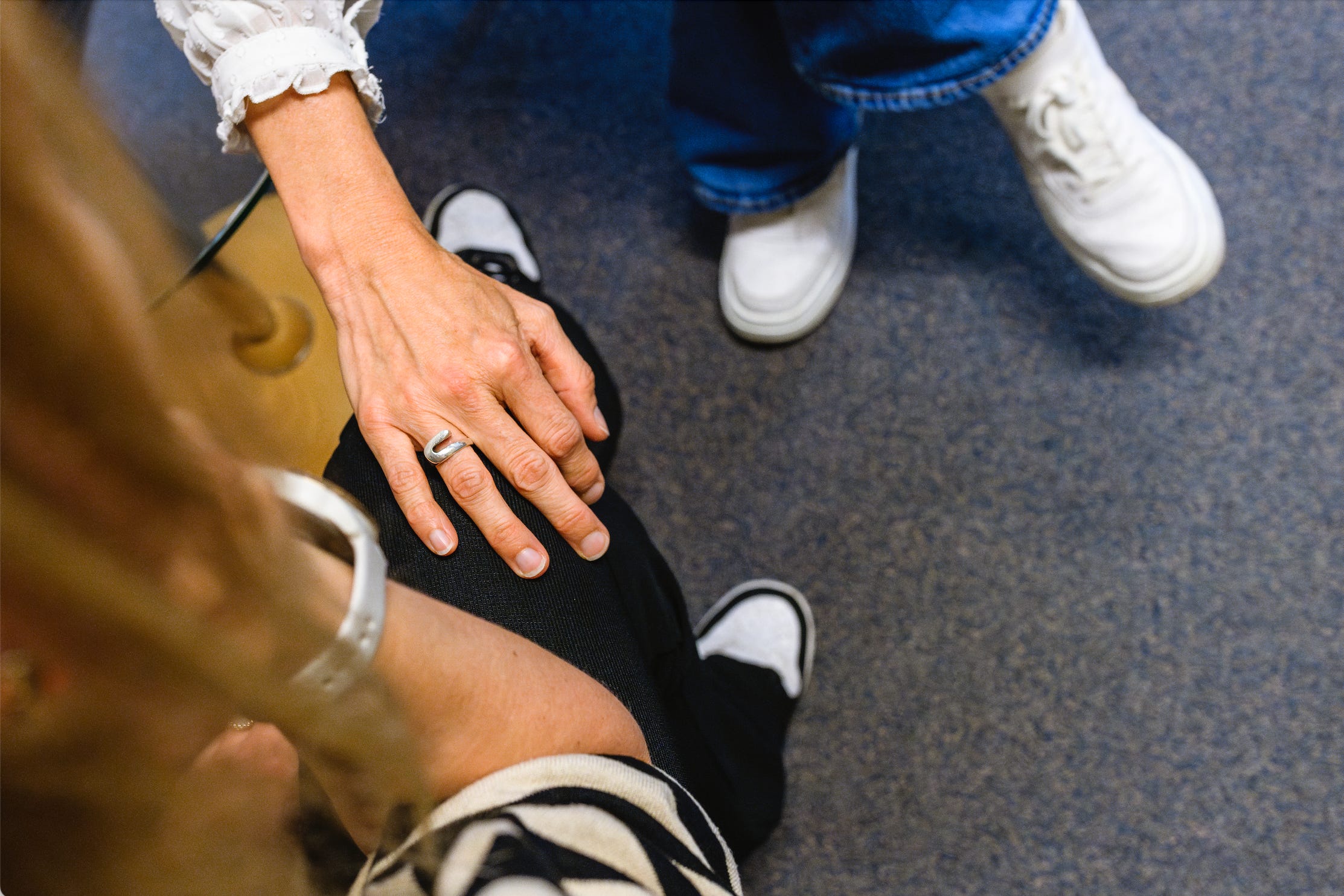
Expertisecentra Zeldzame Aandoeningen
Sommige vormen van kanker komen maar bij weinig mensen voor. Juist dan is gespecialiseerde kennis nodig voor een juiste diagnose en behandeling.
In het Kanker Centrum UMC Utrecht bundelen we die expertise binnen onze Expertisecentra voor Zeldzame Aandoeningen (ECZA’s). Hier werken specialisten uit verschillende disciplines samen en doen we wetenschappelijk onderzoek om de zorg verder te verbeteren.
Omdat deze kankersoorten zo zeldzaam zijn, werken we ook samen in Europese netwerken. Zo krijgt iedere patiënt de best mogelijke zorg, volgens de nieuwste medische inzichten.
Meer over onze Expertisecentra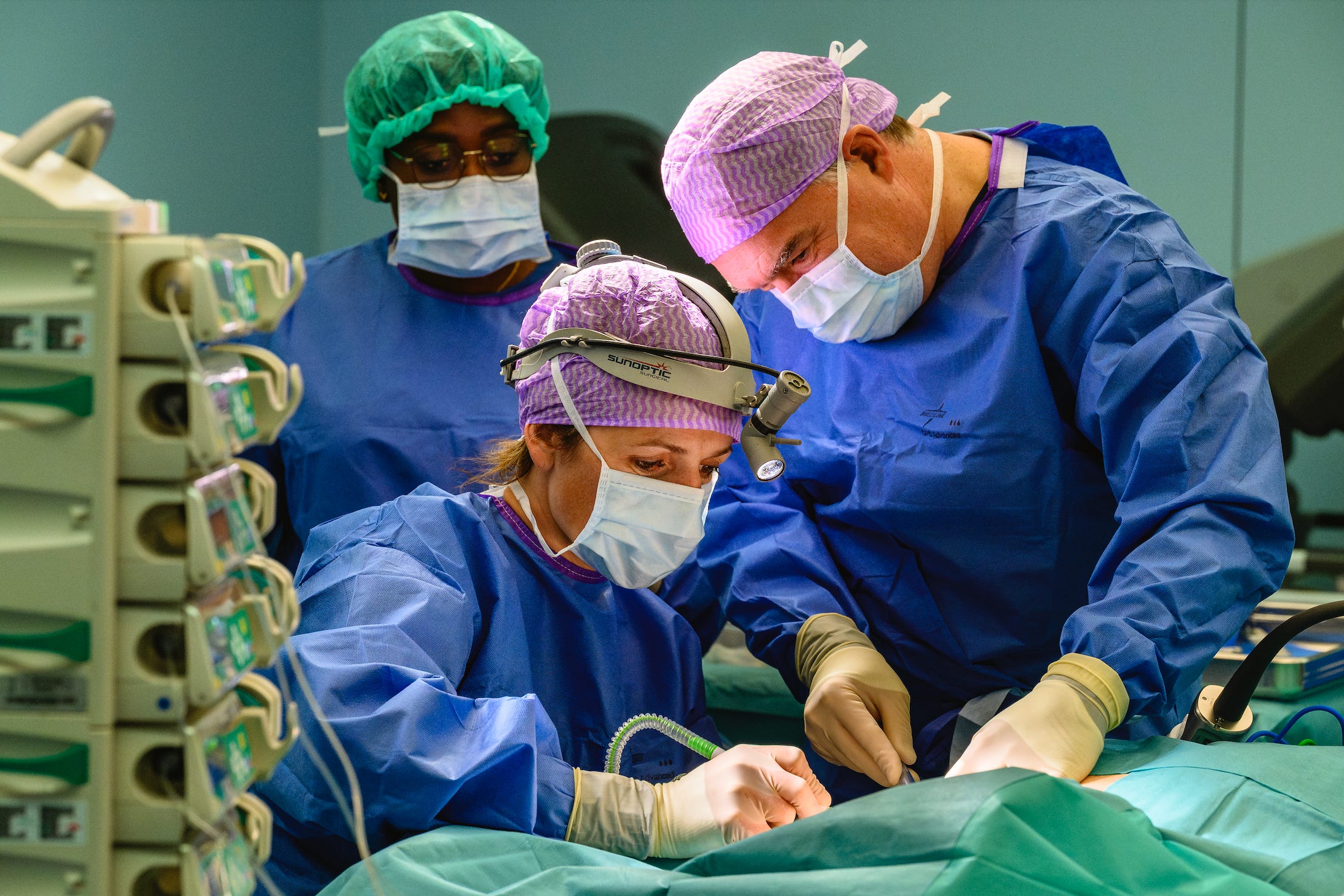
Wetenschappelijk onderzoek naar kanker
Onze onderzoekers en artsen werken elke dag aan nieuwe manieren om kanker beter op te sporen en gerichter te behandelen. Ook willen we de kwaliteit van leven van patiënten verbeteren. Dat doen we met wetenschappelijk onderzoek naar betere diagnostiek en nieuwe medicijnen. We werken aan cel- en gentherapieën en aan nieuwe operatietechnieken. Daarnaast ontwikkelen we persoonlijke behandelingen, bijvoorbeeld op basis van DNA of middels de schildwachtklierprocedure. Ook zetten we organoïden in: mini tumoren die we in het laboratorium kweken uit weefsel van de patiënt. Hieruit kunnen we leren hoe de specifieke tumor groeit en reageert op verschillende behandelingen.
Dit doen we niet alleen. Samen met onze partners op het Utrecht Science park hebben we ons verenigd in Utrecht Cancer. Waar we samen onderzoek doen naar en werken aan aan betere behandelingen, meer overlevingskansen en een hogere kwaliteit van leven voor mensen met kanker, nu en in de toekomst.
Voor kankeronderzoek is er altijd veel geld nodig. Help ons onze nieuwe effectieve behandelingen ontwikkelen. Steun ons via de UMC Utrecht Foundation.
Doneer hier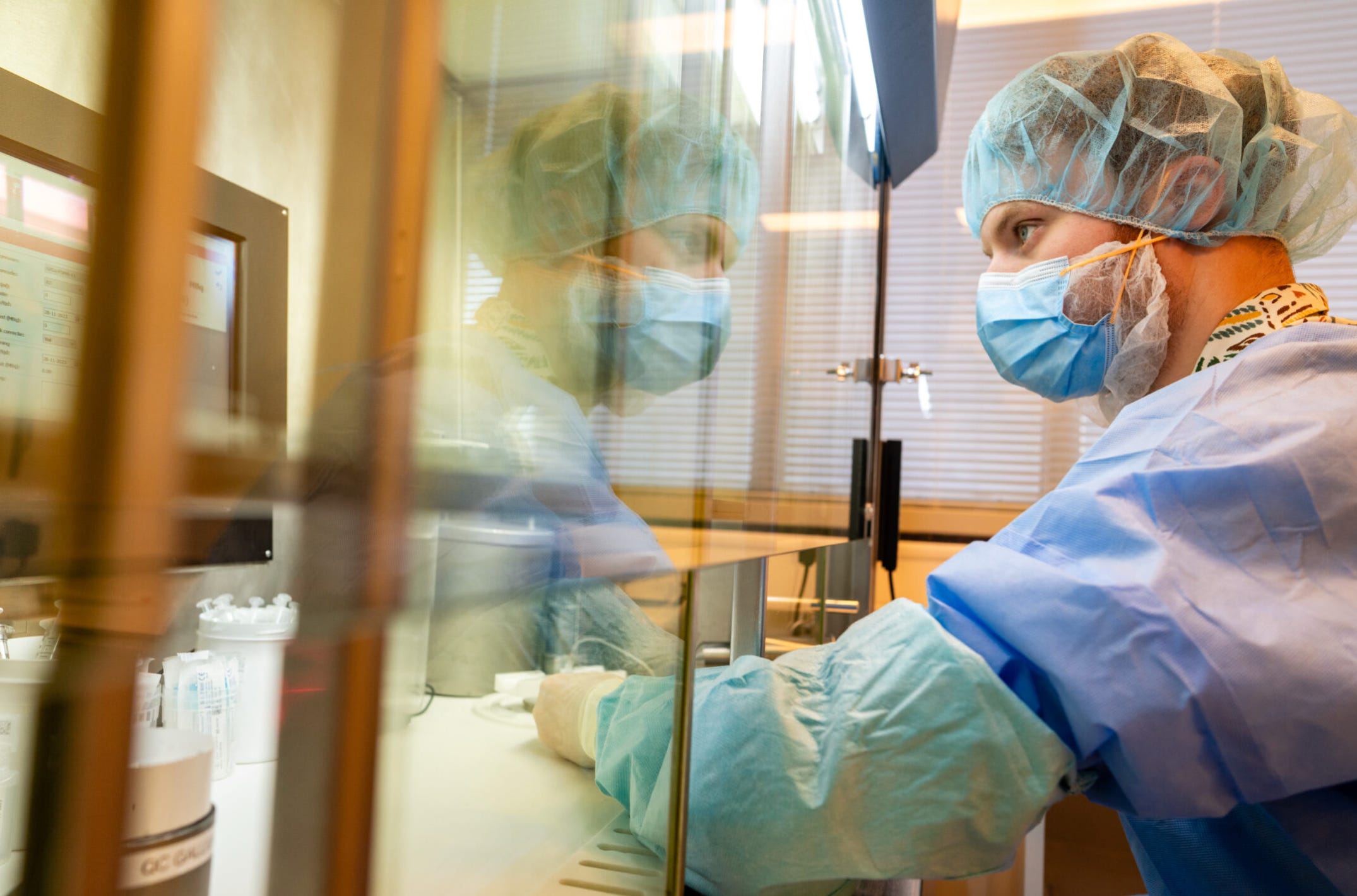
Oncomid
Kanker vraagt om de allerbeste zorg. Daarom bundelen specialisten uit verschillende ziekenhuizen in Midden-Nederland hun krachten in Oncomid. Dit regionale oncologienetwerk bestaat uit acht ziekenhuizen (Alexander Monro Ziekenhuis, St. Antonius Ziekenhuis, Bergman Clinics, het Diakonessenhuis, Ziekenhuis Gelderse Vallei, Meander Medisch Centrum, Ziekenhuis Rivierenland, RIVAS Zorggroep (Beatrixziekenhuis) TergooiMC en het UMC Utrecht) en twee zelfstandige behandelcentra die samen de ambitie hebben om de juiste oncologische zorg op de juiste plek te organiseren.
Gastenverblijf
Een behandeling, operatie of opname kan een spannende en emotionele periode zijn. Dan is het vaak prettig als uw partner, familie of vriend in de buurt kan blijven. In het gastenverblijf van het Kanker Centrum UMC Utrecht kan dat.
Het gastenverblijf is de logeerplek voor naasten van patiënten die in ons ziekenhuis zijn opgenomen. Ook wanneer u zelf vroeg in het ziekenhuis moet zijn voor een opname of afspraak, bent u hier van harte welkom. Het verblijf heeft acht logeerkamers en een ruime, huiselijke woonkamer waar uw naasten zich even kunt terugtrekken.
Zo is er altijd een plek dichtbij, op een moment dat nabijheid en samenzijn het meeste betekent.
Meer over het gastenverblijf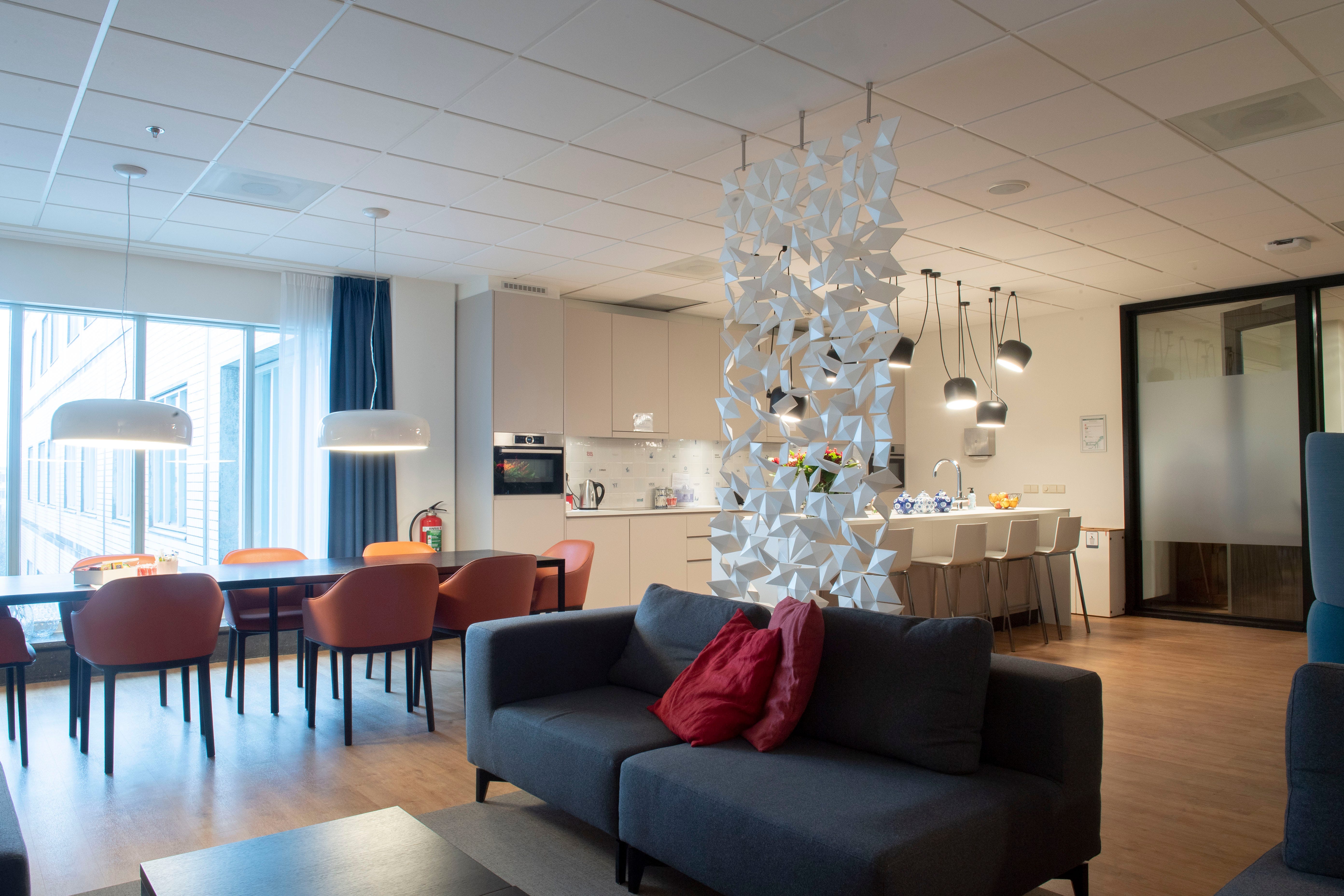
UMC Utrecht Foundation
Ongeveer een op de drie Nederlanders krijgt kanker. Iedereen krijgt dus vroeg of laat met kanker te maken: als patiënt of als naaste van een patiënt. Kanker is een complexe ziekte met meer dan 100 varianten. Het Kanker Centrum UMC Utrecht zet zich in voor betere behandelingen en een hogere overlevingskans, maar meer onderzoek en steun zijn essentieel voor vooruitgang. Steun de UMC Utrecht Foundation.
Doneer nu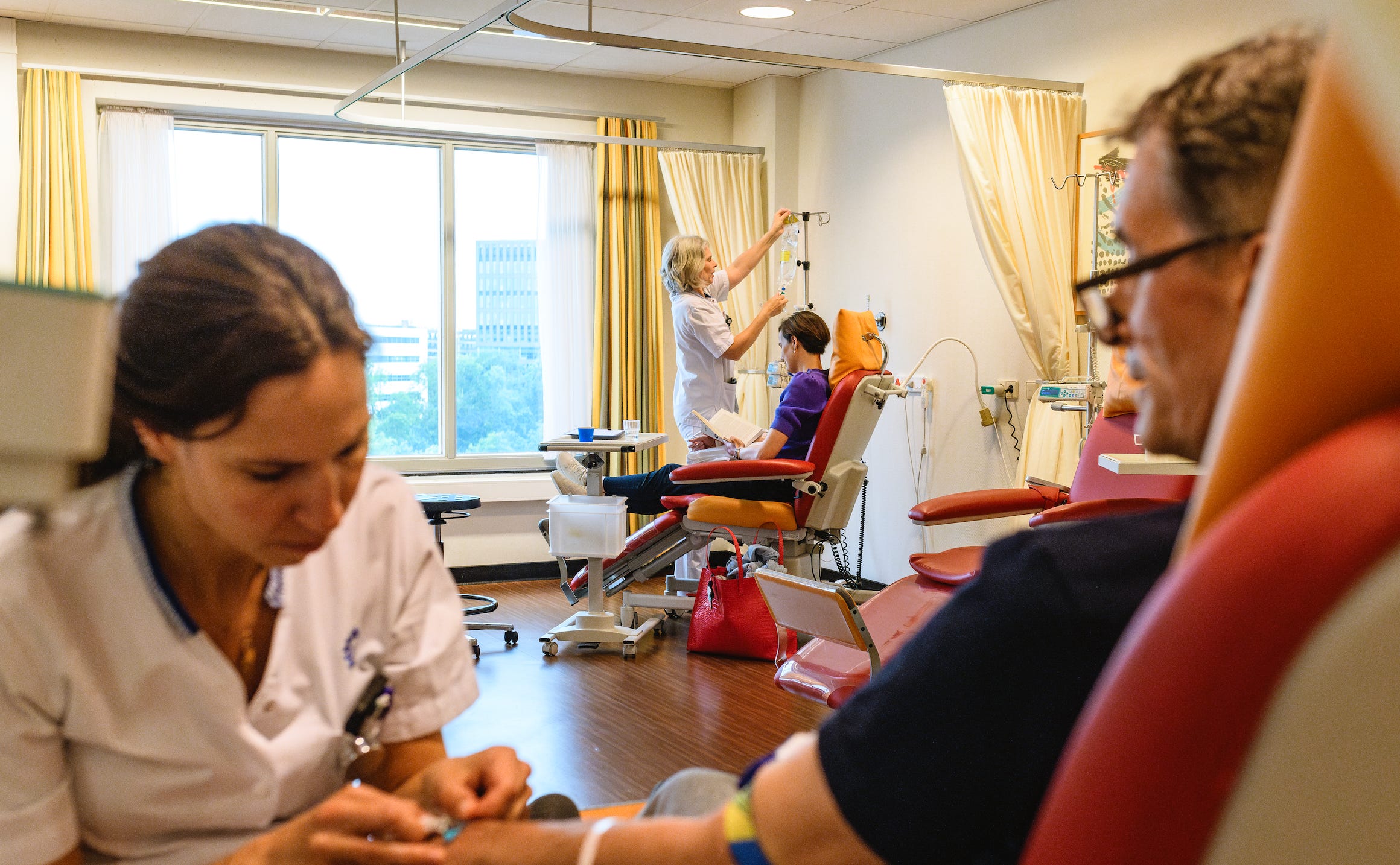
Route & contact
Het Kanker Centrum UMC Utrecht bevindt zich in het UMC Utrecht:
Algemeen
Bezoekadres
UMC Utrecht
Heidelberglaan 100
3584 CX Utrecht
Navigeer voor de parkeergarage van het UMC Utrecht naar Bolognalaan 2, volg vanaf hier de borden 'P UMC Utrecht'.
Meer weten
Als u te horen krijgt dat u of uw naaste kanker heeft, komt er veel op u af. Op onze website vindt u uitgebreide informatie over de verschillende vormen van kanker en de behandelingen die wij bieden.
Leest u vooral de webpagina’s en online folders die passen bij uw ziektebeeld. We begrijpen dat u daarna misschien nog vragen heeft. Stel ze gerust aan uw arts of verpleegkundige. We nemen de tijd om samen te kijken wat voor u belangrijk is.
Wilt u zich verder verdiepen? Neem dan ook een kijkje op de onderstaande pagina’s voor meer informatie, steun en praktische tips.